How to Find the Right Developer for Your Project
A practical guide to finding a developer: prepare the brief, check the portfolio, compare estimates, and accept the first version.
In brief
- • Prepare a short brief before contacting developers
- • Check the task, role, result, and support in a portfolio
- • Agree on cost, stages, and first-version acceptance
ContentsShow sections
When an idea starts taking shape, finding a developer can look easy. Open a catalog, send a few messages, and choose someone with the right stack. In practice, the difficult part is rarely a lack of candidates. It is the lack of a shared definition of the result. A client describes a product in broad terms, a developer estimates only the visible part of the work, and both sides discover the gaps after the project has started.
That is why “how to find a developer for a project” is best treated as a process. First define what the user should be able to achieve. Then compare more than technologies: look at similar work, the developer’s role, the working format, and the acceptance rules. This saves time before development begins and reduces the chance of expensive rework.
Why searching by technology alone fails
The stack can help remove clearly unsuitable options, but it does not answer the most important question: can this person solve your specific problem? Two developers may know the same framework and have very different experience. One may have built internal dashboards, while another has launched products with registration, payments, and multiple user roles. Those are different situations for a client, even if the resumes list the same tools.
There is another common trap. A polished profile does not show whether a person can clarify requirements, explain risks, and carry work through to a usable result. Instead of looking for the “best developer in general,” look for the right person for the next stage: a prototype, a website, an integration, an MVP, or support for an existing product.
Start with the task, not the technical solution
A useful brief does not need to be a twenty-page specification. At the first conversation, answer a few practical questions:
- who will use the product;
- what problem the user is trying to solve;
- which action should lead to the intended outcome;
- what must work in the first version;
- which deadlines, constraints, and external services are already known.
For example, “we need a website for a service” leaves too many interpretations. A more useful description is: “the customer should choose a service, submit a request, receive confirmation, and the manager should see the order and contact the customer.” This gives the developer something concrete to estimate: screens, data, notifications, and integrations. It also makes the budget easier for the client to understand.
A brief can be refined during the conversation. Its job is not to predict every detail. Its job is to create a shared language. Questions about users, scenarios, and constraints are a good sign. A precise deadline announced before the task is understood is a reason to ask what assumptions the estimate depends on.
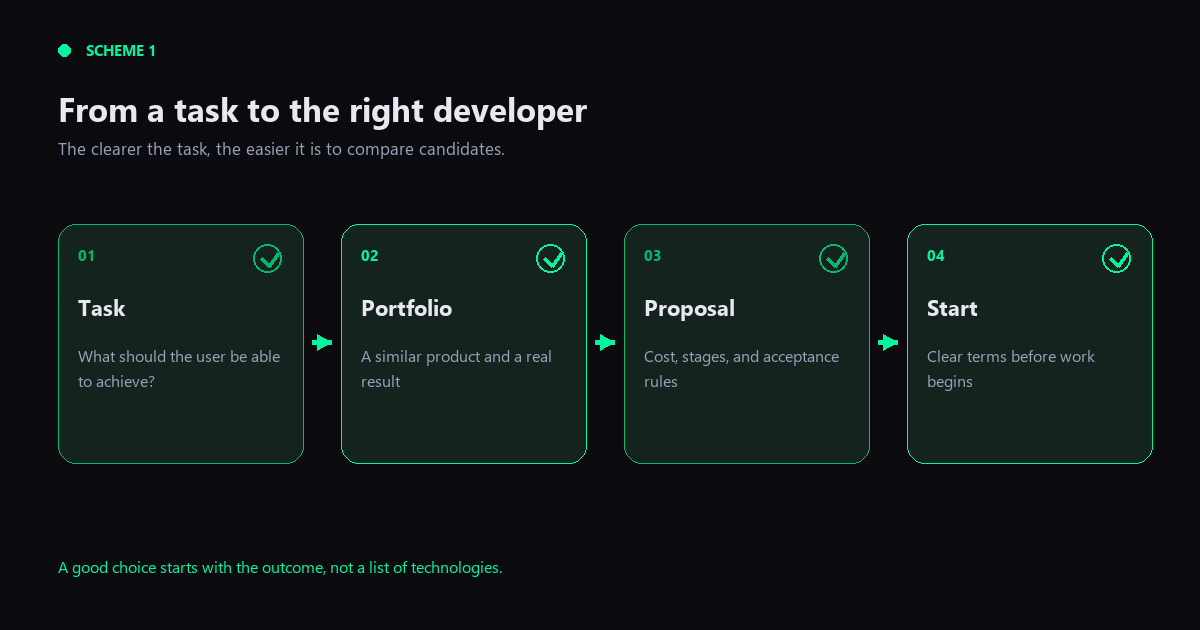
Scheme 1. How a project task becomes a clear developer proposal.
How to check a portfolio without mistaking a showcase for experience
Read a portfolio as a set of evidence. Start with the similarity of the problems, not the number of projects. Look for comparable user scenarios, roles, integrations, time limits, or interface requirements.
Then clarify the developer’s role. A portfolio may show a large product, while the person worked on only one screen or joined near the end. That does not make the work less valuable, but it changes your expectations. Ask what they actually delivered: architecture, interface, server-side work, integration, testing, launch, or ongoing support.
Whenever possible, ask to see a working result. A product link, a short video, or a walkthrough is more useful than general claims. You should not ask for confidential code or private materials. The goal is to understand the logic of the solution, the level of care, and how clearly the developer can explain the work.
The final portfolio question is about what happens after launch. Who fixes important issues? How are credentials and access handed over? Can the product continue to evolve if the first version performs well? These answers distinguish a one-off build from a collaboration where the product has a clear next step.
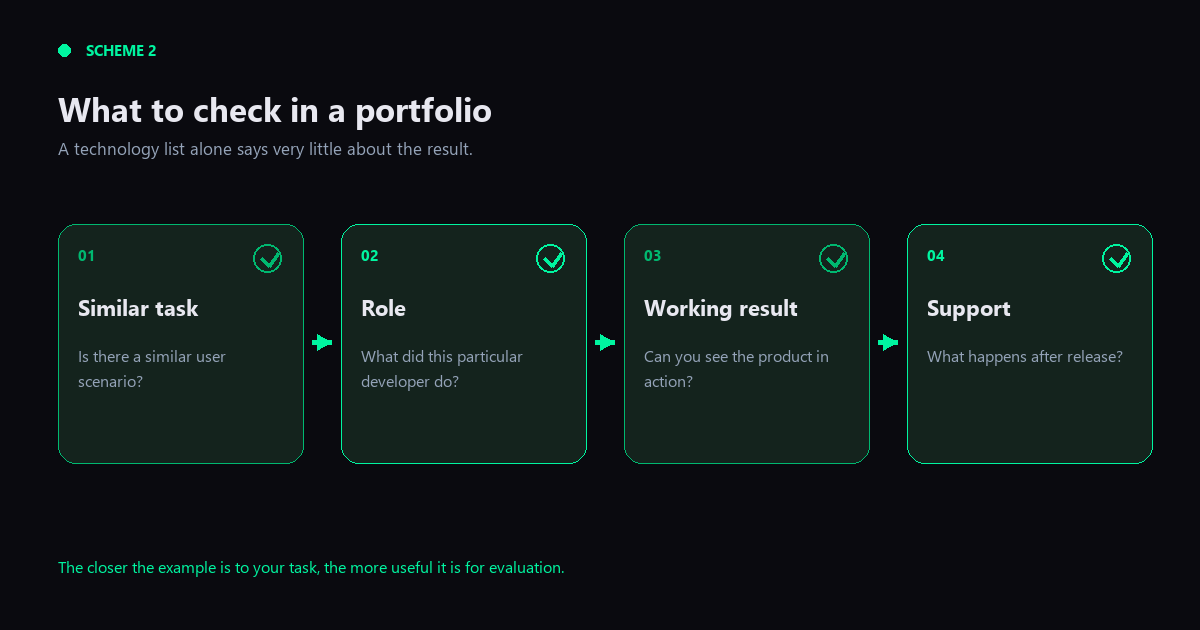
Scheme 2. Four checks that make a portfolio easier to evaluate.
How to compare development estimates
The lowest estimate is not always the best deal. It may exclude testing, external services, hosting, critical fixes, or project handover. A higher estimate does not guarantee a better result either if the proposal has no clear scope.
Compare proposals by structure. What is included in the first stage? What result will be demonstrated? What counts as complete? What happens if the task changes? A useful proposal connects cost with concrete stages and an acceptance process, rather than only a number of hours.
Ask the developer to list assumptions separately. An estimate may depend on a finished design, an available API, a selected payment provider, or someone else preparing the content. Those conditions are not necessarily a problem. The problem is discovering them only after work begins, when they turn into unexpected cost and delay.
For a first version, it is often sensible to split the work into short stages. Test the main scenario first, then add secondary features. This creates an earlier feedback point and prevents the whole budget from being committed to an untested hypothesis.
Acceptance starts with a user scenario
When a developer shows the first version, do not inspect isolated screens only. Walk through the user journey from entry to outcome. For an ordering service, create a request, check the notification, open it as another role, and confirm that the data remains available. For a website, test the form, mobile layout, submission, and message delivery.
Test failure cases as well. What happens with an empty field, invalid data, a repeated click, or a page reload? These cases rarely appear in a polished demo, but they strongly affect user trust.
Before closing a stage, record what has been accepted. The project should include access details, launch instructions, known limitations, and an agreement about support. Handover should not be reduced to a final message saying “everything is ready.” It is part of the deliverable.
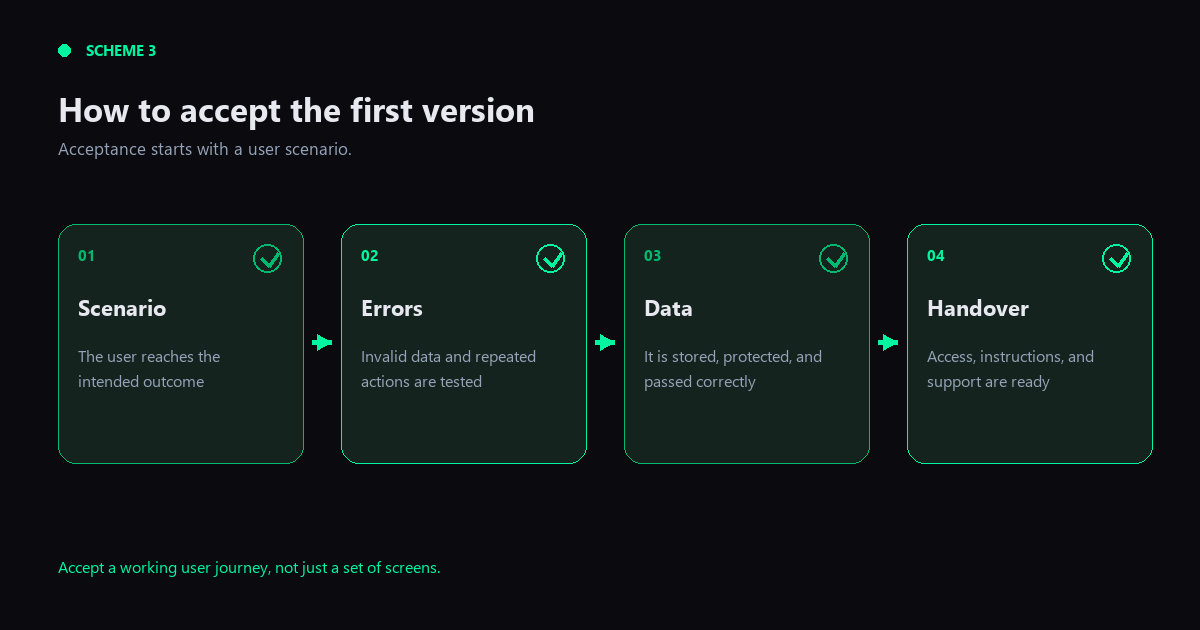
Scheme 3. What to check before accepting the first version.
Where to find a developer for a project
If you are searching for how to find a web developer, start with a place where you can compare profiles and working formats together. On VibeMarket, you can browse the developer catalog, review services, or create an order when the task is ready.
The platform helps bring important questions to the beginning of the conversation: what needs to be built, what outcome is expected, which deadline is realistic, and which working terms fit. This is easier than collecting disconnected contacts across several channels. Developers also get enough context to propose a workable approach.
Good judgment still matters. Compare several proposals, clarify the first stage, ask for a relevant example, and agree on acceptance before work begins. A platform can simplify discovery and communication, but the quality of the result starts with the clarity of the task.
A short checklist before you start
- I can explain in one paragraph what result the user needs.
- The brief identifies the must-have features for the first version.
- The portfolio includes a similar task or clearly relevant experience.
- I know what the first stage includes and how it will be accepted.
- Access, data, external services, and post-launch support are understood.
When these questions have answers, finding a developer stops being a lottery. You are comparing people who can take the project from a defined task to a result you can test, accept, and continue developing.
Discussion
Comments
No comments yet. Be the first to share your experience.
Sign in to join the discussion →